Question – Thought & ANDS for July 5th, 2014!!!

Good Saturday Morning!!
1. Question – BILL O’REILLY: How do you secure the border, Charles?
2. Thought – CHARLES KRAUTHAMMER: Alright, here’s what I’ve been on for years. You start with a fence. It’s very simple. People say, ‘Oh, fences don’t work. You make a ladder.’ Well, then you build two fences, triple strand fences. San Diego did that in the mid 90’s and within a decade, the illegal immigration rate at that point was reduced by 90% and people ended up going through other places like Arizona.
If fences don’t work, why is there one around the White House? If they don’t work, why is it that the Israeli fence which separate Israel from the West Bank has cut down terror attacks within Israel by 99%. Fences work. Yes, there are parts of the border where you can’t have a fence, fine. So you don’t have it in those areas and you do heavy patrols. But there is no reason why a rich country like us cannot put a fence across — a double fence, a triple fence and patrol it all the time. That would have a tremendous impact.

Mark Remick

Question & Thought & ANDs…
​AND:​Dr. Oz has been and can be a force for good, but like all of us, he needs to check himself occasionally.
Video:
http://www.therealfoodchannel.com/page/26872.html
– Ken McCarthy The Real Food Channel
AND:Enjoyed the week’s series on Leadership and your continued encouragement for us dunderheads to read a bit more.  Didn’t do so well on your quizzes tho.  I recognized about 60% of the quotes, and of those I got about half right regarding who was quoted.  Either case, 60% or 30% ain’t passing.

Thought I’d send a quiz your way in return…but mine is much simpler. (no reading ahead for the answers!)
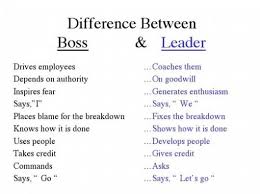
Effective _________  share common traits. These include:
(1)  Integrity: Effective _________ must possess a personal integrity that displays loyalty, honesty and the willingness to act according to their beliefs
(2)  Advocacy:  The best _________ understand the importance of speaking out. In today’s complex world, successful organizations depend and succeed upon honest and timely feedback whether it is good or bad news
(3) Ownership:  Our best ________ take pride in the organizational mission execution and perform to their utmost ability. This Pride translates as Ownership.
(4) Versatility:  The best _________  are versatile in their skill set and flexible enough to adapt to a dynamic/changing environment
(5) Interpersonal skills: (This seems like a given) Strong ________  must able to communicate effectively with others, and handle interpersonal conflicts effectively
(6) Critical thinkers: Successful ________  are innovative and creative, think for themselves (outside the box), and give constructive feedback
(7)  Expertise:  An organization’s best __________s are the individuals who have a thorough knowledge of their organization’s mission and the role they serve within that organization.
AND:Notable & Quotable: Reagan on July 4

Americans celebrate a great adventure in human freedom.

July 2, 2014 7:05 p.m. ET

From President Reagan’s “Message on the Observance of Independence Day, 1981”:

Today, all over America, families and friends are reuniting to renew ties, enjoy each other’s company, and celebrate our Nation’s birthday. It is a day when liberty and laughter go hand-in-hand—when we can acknowledge that, oh yes, we have our faults, and lots of problems, too, but we’re happy and proud because we’re free, and we know the best of America is yet to be. . . .

Back in 1776, John Adams wrote his wife Abigail that the anniversary of our independence should be observed with great fanfare: “. . . with pomp and parades . . . shows and games . . . and sports and guns and bells . . . with bonfires and illuminations, from one end of this continent to the other, and from this time forevermore.”

Well, Mr. Adams, rest assured that what you wanted is being done. Your traditions are now ours, and we guard them like national treasures. And you know why. When we unfurl our flags, strike up the bands, and light up the skies each July 4th, we celebrate the most exciting, ongoing adventure in human freedom the world has ever known.

What makes our revolution unique and so exciting . . . is that it changed the very concept of government. Here was a new nation telling the world that it was conceived in liberty; that all men are created equal with God-given rights, and that power ultimately resides in “We the people.”

We sometimes forget this great truth, and we never should, because putting people first has always been America’s secret weapon. It’s the way we’ve kept the spirit of our revolution alive—a spirit that drives us to dream and dare, and take great risks for a greater good. It’s the spirit of Fulton and Ford, the Wright brothers and Lindbergh, and of all our astronauts. It’s the spirit of Joe Louis, Babe Ruth, and a million others who may have been born poor, but who would not be denied their day in the Sun.

Well, I’m convinced that we’re getting that spirit back. The Nation is pulling together. We’re looking to the future with new hope and confidence—and we know we can make America great.

Question & Thought for March 9th, 2014!!!

Good Sunday Morning!
1. Question – Muslims, Hindu’s, Jews and other believers of their faith do not seem to have a problem witnessing their faith in public. Do you think  Christians are afraid to risk witnessing their faith in public?
2. Thought – Living for a Cause Greater Than Yourself TGIF Today God Is First by Os Hillman Friday, March 07 2014“I can do everything through Him who gives me strength.” – Philippians 4:13

In the thirteenth century a man named William Wallace became the instrument of freedom from England’s tyranny over Scotland. A very wicked king ruled England. A tragedy in the life of William Wallace launched him into living for this cause. Initially his cause was revenge, but soon his cause turned to something bigger than himself – freedom for a nation. When he challenged the commoners to fight for this freedom, they responded that the enemy was too great and that they might die on the battlefield. They also refused to fight for the nobles, the knights and leaders who had a vested interest in gaining more land for themselves versus a pure cause of freedom. Wallace’s response: “Yes, we might die. We will all die sooner or later. But we will die for a cause worth dying for. So that our children and their children might live in freedom.” This story was popularized in the movie Brave Heart (Sherman Oaks, California: Paramount Pictures, 1995).images6ZPQEYYS
Today we find many Christian workplace believers living a status quo relationship with God that is more characterized as “business as usual” than a life demonstrating God’s power. Our focus is often more concerned with improving our standard of living than improving the Kingdom of God through our circle of influence. While this takes place, millions upon millions die without the saving grace of Christ. Many other Christians die never experiencing the freedom in Christ that His blood paid for. God has called each of us to live for a cause greater than ourselves – a life that is dependent on His grace and power to achieve things we never thought possible through our lives. This is His plan for your life. The apostle Paul prayed that He might experience the power of the resurrection in his life. This power is available to you and me to live for a cause greater than ourselves. Ask God what He wants to achieve through your life today. And consider yourself dead already to the consequences of what that might mean for you.
​Cheers!
David Updated! Thanks so much for pictures and so much more!​
Mark Remick

Question & Thought & ANDs…

Question & Thought for February 16th, 2014!!!

Good Sunday Morning!
1. Question – Does understanding & knowledge of Christ liberate us?
2. Thought – There are only two world views:
We are an accident of random chance with no destiny.
We are the product of deliberate and purposeful creation.
What are the key questions of life? They would include: Who am I? Where did I come from? Where am I going? To whom am I accountable? If I come from a Creator, I am His product. I am accountable to Him.
images3FFSZHS1
Chapter 13 rehearses our civil responsibilities to government. In the first eleven verses of Genesis, God created four major institutions: personal volition; marriage; the family; human government. Satan is attacking each one of these today.
Christian maturity is the subject of chapter 14. Paul inverted our unguided presuppositions about spiritual maturity:
“Him that is weak in the faith receive ye, but not to doubtful dispositions. For one believeth that he may eat all things; another, who is weak, eateth herbs.”
The point here is that when one is weak in faith, he puts certain restrictions on himself. There are many reasons for being a vegetarian. But one who does it for religious reasons is weaker in the faith than the one who has the strength and liberty in Christ.
“Let not him that eateth despise him that eateth not; and let not him which eateth not judge him that eateth: for God hath received him.”
The one who is weak is orientated to legalistic externals. But Christ has removed us from ceremonial law. The one who is strong enjoys his full liberty in Christ. And that’s not measured by what we give up, nor is it a license to sin.
“Let no man therefore judge you in meat, or in drink, or in respect of a holiday, or of the new moon, or of the Sabbath days, which are a shadow of things to come; but the body is of Christ.”
All these old rules in the Old Testament were anticipatory. They are there by design and that design will always relate, in some way, to Jesus Christ. Paul confirmed this to us in Romans 15:
“For whatever things were written aforetime were written for our learning, that we through patience [perseverance] and comfort [encouragement] of the scriptures might have hope.”
Paul’s Epistle of the Romans is a definitive statement of Christian doctrine and can command a lifetime of study in itself. It will challenge the greatest minds and philosophers, and yet any of us can understand it and embrace its precepts. (Learn the Bible in 25 Hours by Dr. Chuck Missler)imagesLYWV3GAF
​This is a very insightful book by Dr. Missler.​ Have a great week. Read!!!
I’ve added more to David Mark Byrd Remick on the website.
And, after spending the last two days in a gym (and over 15 + years) watching hundreds of young men wrestle, I’ve come to the conclusion that wrestling coaches ought to replace Congress. They address wrong – expect right – understand responsibility and embrace humility. These fine men get more things done in a wrestling season than Congress gets done. Period. Great leaders!
Question & Thought & ANDs…

Question & Thought for Super Bowl Sunday 2014!!!

Good Sunday Morning!
1. Question – What can we learn about forgiveness & leadership in the Super Bowl?
2. Thought – For the Green Bay Packers’ quarterback Aaron Rodgers, the road to becoming Super Bowl champion and MVP was paved with speed bumps, stoplights, and sharp curves. On the field, football fans know Rodgers for his cannon of a throwing arm, his high-light reel touchdowns, and his poise under pressure, but it’s his off-the-field attitude and work ethic that make Rodgers the man he is.
Rodgers grew up playing football at Pleasant Valley High School in Chico, California, where he made a name for himself by setting single-season records as the starting quarterback. But as a senior, Rodgers stood only five foot ten and weighed 165 pounds – far too small for Division I college quarterbacks. In fact, Rodgers got only one Division I offer and it was as a walk-on, so he decided to attend Butte Community College.
In his freshman year, Rodgers threw an incredible 28 touchdowns while leading Butte to a 10-1 record and a NorCal Conference championship. With this new found attention, he transferred to the University of California, Berkley, where he led Cal to a bowl game victory and a top-five ranking nationwide. Rodgers decided to forgo his senior year at Cal and enter the NFL draft.
Rodgers was rated one of the best quarterbacks in the nation and widely regarded as a number one pick overall in the NFL draft. Things didn’t go as planned for Rodgers, however, and he slipped all the way to the Packers with the 24th pick – a huge disappointment for such a highly touted prospect.
Starting at QB for the Packers was the great Brett Favre, so Rodgers spent the 2005-2007 seasons on the Packers’ bench only seeing playing time if Favre got hurt. Nevertheless, Rodgers never complained, worked hard, and waited patiently for his chance. In 2008, Favre announced his retirement and Rodgers stepped in as the starting QB.
Once again things didn’t go as planned for Rodgers. Favre decided to return from retirement in he 2008 season and expected his starting job back. In what became a tense and ugly war of words between Favre and the Packers’ organization, Favre was eventually traded to the New York jets and the reins were officially handed to Rodgers. Despite Favre’s antics and the pressure of replacing the Hall of Fame QB, Rodgers held his tongue, remained supportive of the organization, and never once lashed out.images1C42OPD8
After finishing 13-3 in 2007, the spotlight was on Rodgers in 2008. He played well, but the Packers finished a measly 6-10 and did not qualify for the playoffs. Skeptics wondered if the Packers had made a huge mistake by keeping Rodgers and letting Favre go. In 2009, Rodgers came back and answered critics by leading the Packers to an 11-5 season and a playoff birth. In his first playoff game, Rodgers threw an amazing four touchdowns and passed for over 400 yards, but fumbled in overtime to lose the game. His critics were back louder than ever.
In 2010, Rodgers rebounded again and came back better than ever, leading the Packers to the Super Bowl. It was the biggest game of his life, the moment that Rodgers had worked so hard for, and once again things had started to go wrong. It must have felt all too familiar to Rodgers. This time his own teammates turned on him and started dropping passes – five perfect passes that could of sealed the game.
With the Super Bowl on the line and the Pittsburgh Steelers trying to make one of the greatest comebacks ever, Rodgers zipped a spiral to his wide receiver Jordy Nelson. Had Nelson caught the ball, the game would of been over, but he dropped another wide-open pass. Did Rodgers lose his cool? Did he scream and yell at his receivers? No, he ignored the drops, the pressure, the critics, and he got back in the huddle and kept working. Remarkably, Rodgers threw the very next pass right back at Nelson, and this time Nelson caught the ball for a huge first down.
Two plays later the Packers scored another touchdown and the game was out of reach for the Steelers. After the game ESPN’s Rick Reilly, recalling Rodger’s throwing again to Nelson after he dropped a crucial pass, captured Rodgers’ persona perfectly. He said, “To err is human, to forgive divine. But to forgive in the Super Bowl – is even better.” (From The Book of Man by William J. Bennett)
​EnJOY the Game!​imagesGGA10XVP
Mark Remick

Question & Thought & ANDs…