Question & Thought for September 1st, 2015!!!

Hello September!
1. Question – Do you wonder what our young people think of institutions after being educated in our education system today?
2. Thought – Young people are raised to think that big problems can be solved by a swarm of small, networked NGOs and social entrepreneurs. Big hierarchical ​organizations are dinosaurs.
This mentality has contributed to institutional decay. As the editor Tina Brown has put it, if everybody is told to think outside the box, you’ve got to expect that the boxes themselves will begin to deteriorate.
People who possess an institutional mindset, as Marshall did, have a very different mentality, which begins with a different historical consciousness. In this mindset, the primary reality is society, which is a collection of institutions that have existed over time and transcend generations. A person is not born into an open field and a blank social slate. A person is born into a collection of permanent institutions, including the army, the priesthood, the fields of science, or any of the professions, like being a farmer, a builder, a cop, or a professor.
Life is not like navigating through an open field. It is committing oneself to a few of the institutions that were embedded on the ground before you were born and will be here after you die. It is accepting the gifts of the dead, taking on the responsibility of preserving and improving an institution and then transmitting that institution, better, on to the next generation. (The Road To Character by David Brooks)
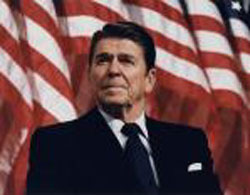
“Just as surely as we seek to put our financial house in order and rebuild our nation’s defenses, so too we seek…to end the manipulation of our schoolchildren by utopian planners.” (President Ronald Reagan, March 20th, 1981)

rem – know the why or lose the way! 
Question & Thought & ANDs.

Question and Thought for August 7th, 2015!!!

Good Friday Morning!
1. Question – Would you rather be euphoric over presidential rhetoric or pragmatic?
2. Thought – Ike’s speech came at a crucial pivot in American politics and even public morality. On January 20, 1961, John F. Kennedy gave an inaugural address that signaled a cultural shift. Kennedy’s speech was meant to indicate a new direction in the march of history. One generation and one era was ending and another generation would, as he put it, “begin anew.” There would be a “new endeavor ” and “a new world of law.” The possibilities, he argued, were limitless. “Man holds in his mortal hands the power to abolish all forms of human poverty,” he declared. Kennedy issued a call to uninhibited action. “We shall pay any price, bear any burden, meet any hardship…” He called on his listeners not to just tolerate problems, but to end them: “Together let us explore the stars, conquer the deserts, eradicate disease.” It was a speech of a man supremely confident in himself. It inspired millions of people around the world and set the tone and standard for political rhetoric ever since.
Three days earlier, however, Eisenhower had given a speech that epitomized the worldview that was fading away. Whereas Kennedy emphasized limitless possibilities, Eisenhower warned against hubris. Whereas Kennedy celebrated courage, Eisenhower celebrated prudence. Whereas Kennedy exhorted the nation to venture boldly forth, Eisenhower called for balance.
Eisenhower warned the country against beliefs in quick fixes. Americans, he said, should never believe that “some spectacular and costly action could become the miraculous solution to all current difficulties.” He warned against human frailty, particularly the temptation to be shortsighted and selfish. He asked his countrymen to “avoid the impulse to live only for today, plundering, for our own ease and convenience, the precious resources for tomorrow.” Echoing the thrifty ethos of his childhood, he reminded the nation that we cannot “mortgage the material assets of our grandchildren without risking the loss also of their political and spiritual heritage.”
He warned, most famously, about the undue concentration of power, and the way unchecked power could lead to national ruin. He warned first about the military-industrial complex – “a permanent armaments industry of vast proportions.” He also warned against “a scientific-technological elite,” a powerful network of government-funded experts who might be tempted to take power away from the citizenry. Like the nation’s founders, he built his politics on distrust of what people might do if they have unchecked power. He communicated the sense that in most of the times, leaders have more to gain from being stewards of what they have inherited than by being destroyers of what is there and creators of something new.
This was the speech of a man who had been raised to check his impulses and had then been chastened by life. It was the speech of a man who had seen what human beings are capable of, who had felt in his bones that man is a problem to himself. It was a speech of a man who used to tell his advisors “Let’s make our mistakes slowly,” because it is better to proceed to a decision gradually than to rush into anything before its time. (The Road to Character by David Brooks)
​”Freedom is not free.”​ (Dr. Ben Carson)
​Don’t text and drive, drink water, read and think!​
rem – know the why or lose the way! 
Question & Thought & ANDs.

ANDs for 29 July 2015!!!

Good Wednesday Morning from you all!! Below are your recent comments! I cannot list them all………so please be patient…Ands……
 
AND: THOUGHT FOR THE DAY!

“There’s no way to rule innocent men. The only power any government has is the power to crack down on criminals. Well, when there aren’t enough criminals, one makes them. One declares so many things to be a crime that it becomes impossible for men to live without breaking laws.” — Ayn Rand, Atlas Shrugged, Ch. III
 
 
AND: Noticed you quoted Norm and Frank.

For what it is worth Frank Turek is giving a talk at Forest Hill church this weekend.

His class is for young kids headed to college.  Arming them with a defense against a hostile atheistic world view.

http://www.foresthill.org/the-case-for-christianity.html

I was in a small men’s bible study with Frank and a few other guys for several years.   You would have enjoyed many of the conversations.

 
AND: This is such a good question. One of my most favorite moments in my life was when my grandmother past away. My brother was asked to deliver the eulogy and he wanted it to reflect the entire  family. He gathered all 13 grand children and asked us to share a story  about gram. As we each shared, we laughed, cried and celebrated all the ways she touched, taught, mentored, scolded and spiritually affected our lives, each in a different way. What a legacy to leave with this world. 
 
AND: And one last thought, we cease to impact other people with our death…we aren’t Jesus after all.  When we are dead, we are simply dead to this world.  For once we are dead, we won’t care how our funeral goes, how we are buried, who attends, or what was said. The greatest impact is being alive to share and teach about the little things that impact the big things every day.  I would rather focus on the living.
 
AND: Good Question!!!
 
AND: IMO, this article is a little harsh…but then perhaps I don’t know what a “dying country” is.  The country is moving towards Socialism…and will look like many European countries in many ways.  Yes, we are moving away from morality and spirituality…certainly when you look at today vs sixty years ago. Yes, we have a ‘controlled’ educational system that favors the Left….as does our current media situation.  These are huge obstacles to over come.

As you have said in the past, the US is on the wrong trajectory.  I like that analysis better than saying a dying country. 0 said he’d change America, and he certainly has enabled that change.  Can we reverse course? I believe we can.
AND: Satan is now believed and God forgotten. We are in the presence of hell and we do not even know it.  The destruction by fire may well have been set 2 days ago. Israel is now alone and the Grace of God will be accepted by fewer and fewer.  Times continue to be interesting and I pray God will give me the strength to do his will and not fall into the relativism of the masses.  
​AND: ​I have given your second question considerable thought:

Q: ‘Why should I let you into my heaven?’
A:  As for me, there isn’t a single reason…no compelling reason at all.  There isn’t even a start to the conversation.
 If I enter, it will by God’s grace and nothing else.  I do not confuse my desire with God’s reasoning.  Grace alone bubba.
 
​”​

Many believe in God.
Few believe God.

​” (Sign on a church here in Washington, N.C.)


rem – know the why or lose the way! 
Question & Thought & ANDs.

Question & Thought for July 28th, 2015!!!

Good Tuesday Morning!
1. Question – Just what will people say about you when the dance is over?
2. Thought – Recently I’ve been thinking about the difference between the resume virtues and the eulogy virtues. The resume virtues are the ones you list on your resume, the skills that you bring to the job market and that contribute to external success. The eulogy virtues are deeper. They’re the virtues that get talked about at your funeral, the ones that exist  at the core of your being – whether you are kind, brave, honest or faithful; what kind of relationships you formed.
Most of us would say that the eulogy virtues are more important than the resume virtues, but I confess that for long stretches of my life I’ve spent more time thinking about the latter than the former. Our education system is certainly oriented around the resume virtues more than the eulogy ones. Public conversation is, too – the self-help tips in magazines, the non-fiction bestsellers. Most of us have clearer strategies for how to achieve career success than we do for how to develop a profound character. (The Road to Character by David Brooks)
Glad to be back. Vacation was great. Got away from technology and thought more.
This book makes me think of an angel in my life named Thomas Palmer. He had character!
“Can I ask you a spiritual question…..? If you were to die tonight and appeared before God and He said, ‘Why should I let you into my heaven?’ What would you say?” (I Don’t Have Enough Faith to be an Atheist by Norman Giesler and Frank Turek)

rem – know the why or lose the way! 
Question & Thought & ANDs.